strategic advisory
most people look at the canopy.
we read the roots.
we trace the symptom back to where it actually began — the one-degree drift, far upstream, that everything downstream is paying for.
direct by nature. always on your side.
undrstory works where most advisors don't go — beneath the strategy, beneath the narrative, into the dynamics that are actually running your business. not a quick fix on the nearest symptom, but a read that traces it back to where the disruption began — so the whole system comes more alive over time. the result is clarity you can build on.
three real reads. in each, the symptom surfaced in one place — and the cause was living somewhere else entirely, in a system no one had thought to connect. some resolved. one revealed an organization that wasn't ready. that, too, is the work.
a fast-scaling company hit a wall: support volume climbing, headcount capped, and a mandate to close the gap with automation instead of hiring. the team pushed the AI layer as far as it could go — and it absorbed the simple, repetitive questions almost entirely.
then leadership moved to scale the human layer the obvious way: add capacity at the lowest cost. cheaper hands for the overflow.
but I'd been tracking what the automation had done to the shape of the work. by clearing the easy tickets, it had inverted the requirement — everything still reaching a human was now the hard stuff. the remaining work didn't need more, cheaper people. it needed fewer, more skilled ones. adding low-cost capacity actively degraded the thing it was meant to fix.
and the deeper cause sat upstream, in how the systems were permissioned to talk to each other. the AI could see a little, but it couldn't reach across into the other internal tools to pull what it needed — and it certainly couldn't take an action on what it found. it was walled off from the very systems that would let it resolve anything. so it stayed stuck at raise the question, never close the loop.
the real leverage was there, in order: let the AI access the data across systems, then let it act on that data — and only then, for the genuinely complex cases left, tee them up so a skilled human could resolve them in close to a single step. not more hands at the bottom. authority at the seams.
the symptom was "we can't keep up." the reflex was to add capacity. but the automation had already changed what the work was — and the systems were never permissioned to let it finish the job. the fix wasn't more of anything. it was letting the systems talk, and act.a technician flagged something small: physical units kept getting marked damaged, but when the team assessed them, nothing was wrong. most people would've written it off as noise. he had a real concern, so I looked.
I went into the usage data — reading it second by second. the damage flags all traced back to low user ratings, which usually mean something's broken. but nothing was. so I kept going. same model of unit, but that was most of the fleet, so not unique. then I watched the movement data as sessions pinged: every one of these units entered a restricted-speed zone, slowed as designed — and never came back up to speed, even after leaving the zone.
they were getting stuck slow. every user after gave a low rating. enough low ratings auto-triggered a damage flag. the units got pulled from service, generating no revenue — and this was happening at a scale no one could see, because the model was only lightly distributed, so the reports never clustered loudly enough to notice.
here's what made it invisible: the service depot sat inside a restricted-speed zone too. so when technicians tested the "damaged" units, they ran fine — because they were supposed to be slow there. the diagnosis was happening inside the exact condition causing the fault. the units cycled back out, got stuck again, and the loop repeated.
the real cause was a code change from weeks earlier, in a completely different system. I traced it back, and named it — publicly, in the channel reserved for major outages, which is its own kind of risk. within minutes every senior engineer and operator was in the room.
the symptom was "damaged units." the cause was a line of code in another system, hidden by the very environment built to catch it. no single team could have seen it from inside their own lane. that's the read.a mission-driven institution came in with a clear ask: modernize, but gently. they knew they'd drifted — structures built decades ago and never revisited — and they wanted an outside thinker to help. or so the ask went.
the surfacing problem looked like neglect. the very things the organization existed to protect had fallen into serious disrepair — ignored, worked around, quietly failing. the easy read was individual: people weren't doing their jobs.
but I traced it back to the origin. a benefit, generous when it began, had over the years fused two kinds of security into one — so the thing keeping people housed and the thing keeping them employed became the same thing. that loop had no exit. good intent, compounding one degree at a time, until it trapped the very people it was meant to support and hollowed out every incentive the organization was counting on.
and here's where the drift became undeniable: the symptom it produced now stood in direct opposition to the organization's mission. the institution built to preserve was, through its own structure, presiding over decay. the neglect wasn't the cause. it was the residue of an origin no one had re-examined in decades.
the fix worked at the source: restructure the benefit so security and employment were no longer the same lock — pay people more, and give them a real choice about whether to stay.
the read was structural, not personal — and it was accurate. but acting on it meant releasing a story the organization had told about itself for a very long time. it wasn't ready to. naming the real cause doesn't guarantee the will to change it. that, too, is a finding.think of the gut and the brain — two systems in a constant loop. when the signaling between them breaks down, the problem surfaces somewhere other than where it started. treat it where it shows and you miss it entirely. the systems are too entangled to read the cause off the symptom. you trace the whole relationship back to where the disruption actually began.
how most companies operate
two teams, two problems, solved separately — as if they weren't connected. it isn't wrong. it works. but it's slower, more costly, and it doesn't hold at scale. left alone, the small misalignment compounds into something far more expensive to fix later.
the undrstory read
full-body analysis: the two symptoms you're treating apart most likely share one source. like a flight path thrown off by a single degree, we trace back to the moment the angle shifted — and correct it there, so both problems resolve, and the next ones never form.
the systems only start talking again when someone names what's moving between them — the correlation no single team can see from inside its own lane. that's the choice: keep chasing symptoms as they surface, or find the healthier, more regenerative way to build — the one that holds as you scale.
in a forest, no tree stands alone. the roots signal each other underground — sharing what one has and another needs, catching stress before it spreads. the health of the whole lives in what moves between them.
regenerative by design
not sure yet? the canopy walk is a two-hour read for leaders who want to experience the work before going deeper.
start here
$500
a two-hour strategic call for leaders who want a read before committing to the next move. you share the view from the top. we read what's underneath — where the signals connect, and what's actually upstream of the problem you think you have.
requires pre-work submitted before the call — the more honest, the better the read. deductible in full from the ground truth if you decide to go deeper.
for founders who want a read before committing to the full engagement.six-week diagnostic — one client at a time
$9,000
one bad hire, one misaligned launch, one planning cycle built on the wrong assumption costs more than this.
a full immersion into what's actually happening beneath the surface of your business. we sit in the rooms, meet the people, read the currents, and name what no one else has named.
this is not an audit. it is a read — of the dynamics, the gaps, what the team knows but hasn't had the space to surface, and the hidden thread connecting what's not working.
this often results in
ongoing advisory — by invitation
retainer
an ongoing advisory relationship for leaders who've completed a canopy walk or ground truth. because real tending requires knowing the roots first.
canopy
$1,500 / month
weekly call. steady presence. the read maintained over time.
roots
$3,000 / month
high-touch, on-call access. for active moments and a real-time thought partner.
the undrstory promise
sometimes the read lands the moment it's delivered. relief. recognition. the feeling, finally named.
sometimes it doesn't. the first thing that comes up is resistance — because what's being named touches something you've built, believed in, or held as true for a long time.
the truth has its own timeline.
when it lands — and it will — come back. i'll give you a complimentary one-hour call to look at it together with fresh eyes. not to say I told you so. to go deeper now that you're ready.
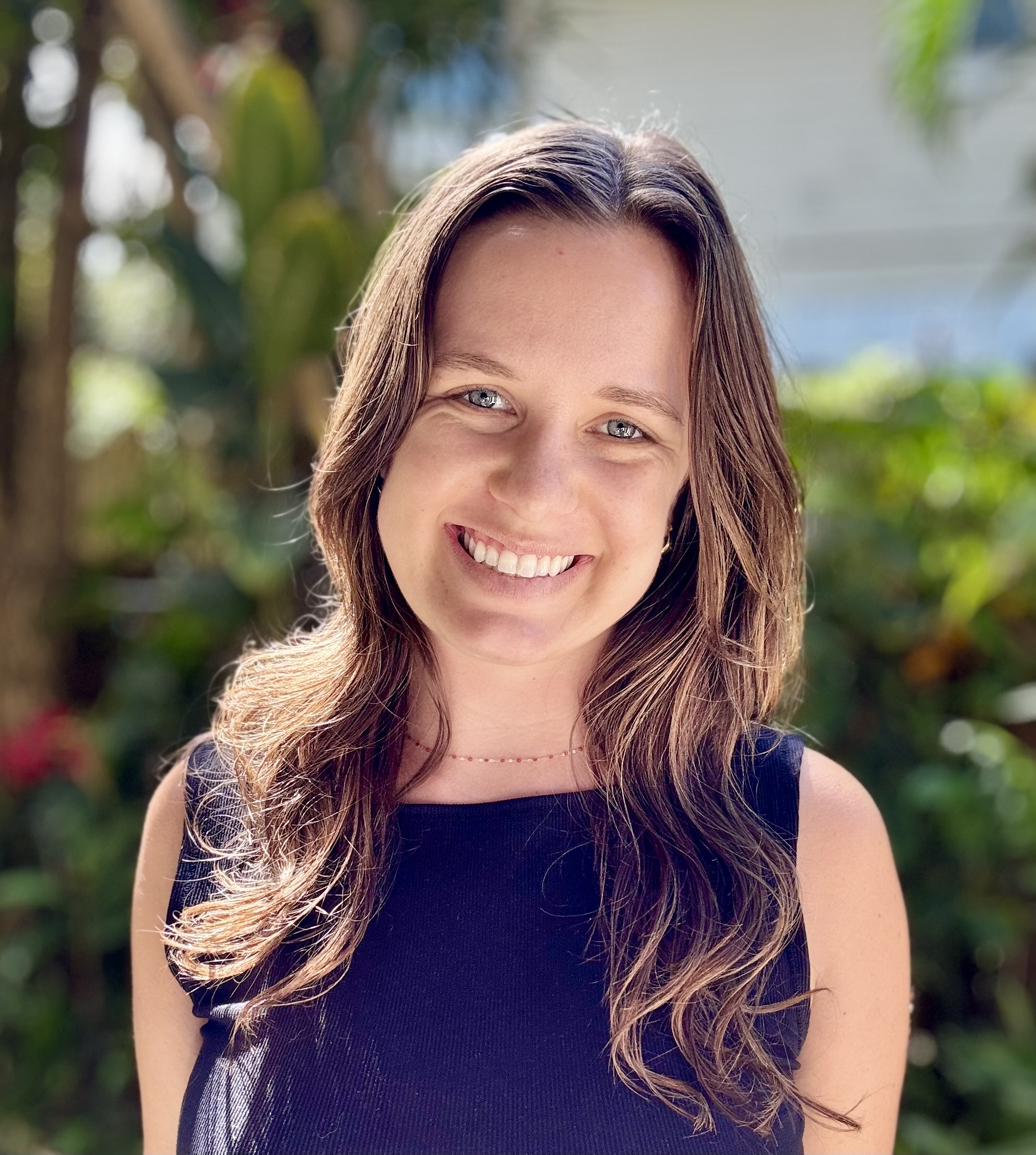
the founder
founder, undrstory
I first learned to read a system at its root studying food as medicine — the belief that you don't chase symptoms one at a time, you find what's upstream and heal it in the order the body can actually absorb. I never stopped reading that way. I just started doing it inside organizations.
I've spent my career inside the machinery — not advising from a distance, but embedded in the decisions, the teams, the moments where things either connect or they don't. operations. product. strategy. the messy middle where what's on the slide meets what's actually happening on the ground floor.
I've launched international offices, integrated acquisitions, built AI tools, reorganized departments, redesigned how companies onboard and retain their people. I've opened a wine bar, a gallery, audited a museum, hosted wellness retreats, led teams through hypergrowth and through contraction. across tech, hospitality, wellness, nonprofit, the arts — the industries change. the patterns don't.
that depth is what makes the read accurate. I'm not pattern-matching to a framework. I'm reading your specific system — how it moves, where it stalls, what it's actually optimized for whether you intended that or not.
choose your entry point and reach out.